
A pressure canner is usually the single biggest purchase in a home canning setup, and it is not one most people want to get wrong. Buying your first pressure canner comes with a stack of questions, and most of them do not get answered until after the box is already open. A Denali pressure canner handles low-acid vegetables, meat, and broths that a water bath canner cannot touch, but new owners still want to know what the gauge does, what ships in the box, and what happens if a part wears out. Here are the questions that come up most before that first batch goes on the stove, answered straight, with no upsell attached.
How Big of a Denali Pressure Canner Do You Actually Need?
Sizing is usually the first decision, and it is easy to either overbuy out of caution or underbuy to save counter space. Neither extreme tends to work out well once the first harvest actually arrives.
Counting Batches, Not Just Quarts
The number that matters most is not the quart rating by itself, it is how many batches a season actually needs. A single canner load of a 23-quart size can carry a full harvest run through in one sitting, where a smaller pot means starting the stove twice for the same amount of food. For anyone canning more than a handful of jars at a time, that difference adds up fast across a season. Big households, jars gifted out to family, or a small farm stand all point toward wanting the larger interior rather than regretting a smaller one halfway through the first harvest.
Why 23 Quarts Covers Most Kitchens
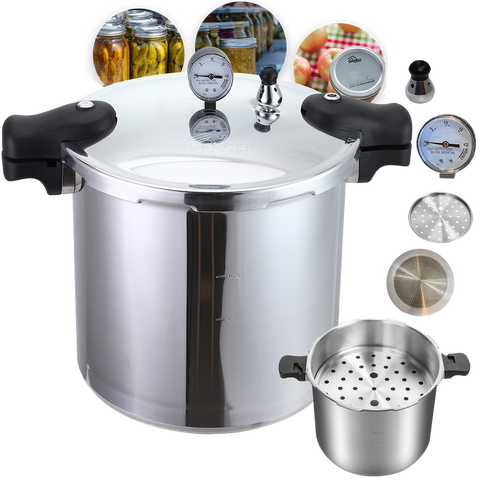
The TANKER holds a 23-quart interior, which fits standard pint and quart mason jars with enough headroom to load a full rack without forcing lids against the walls. That size covers the common cases: a weekend of garden tomatoes, a deer processed into jars, or a batch of stock big enough to last the winter. It is also one reason a pressure canner for beginners is usually better off sizing up once than upgrading twice a year later.
When a Smaller Canner Still Makes Sense
A smaller unit can still make sense for an apartment kitchen, a single-burner setup, or someone who only cans a few jars of jam a year and never touches low-acid foods. That said, most home canners who start small end up replacing the canner within a season or two once they start processing meat, beans, or broth in real volume. A half-load in an oversized canner still processes safely; it just means paying for capacity that goes unused that day, which is a smaller problem than outgrowing a canner twice.
Meet the TANKER™ Pressure Canner
Explore Denali's pressure canner for home food preservation and see its features, capacity, and setup details.
Explore the TANKER™ →Dial Gauge or Weighted Gauge: Which One Does It Use?
This is the question that stalls the most first-time buyers, and the honest answer is that a new canner does not have to choose.
Why the TANKER Uses Both
The TANKER ships with a premium dial gauge for an exact PSI reading, plus a 15-pound weighted regulator already attached and a 10-pound regulator included in the box. That combination means a new owner can watch the needle for a precise number early on, then switch to the rock-and-jiggle feedback of the weight once the process feels familiar. New owners often worry about trusting a single system; having both on hand means a quick visual check against the dial is always available, even after switching over to the weight full time. Keeping a spare weight on hand is worth it too, since it is the one small part that is easy to misplace between canning seasons.
Where a Pressure Canner for Beginners Should Start
Most people learning the process lean on the weighted side first. There is nothing to calibrate, and the motion of the weight makes it obvious the canner is holding pressure, which takes some of the second-guessing out of a first batch. It also means there is nothing to send in for annual accuracy testing, which matters most in that first year when a canning routine is still forming. A pressure canner for beginners can always move to reading the dial gauge more closely later, once the rhythm of a full canning session feels routine.
What Ships With It, and What Should You Add?
Unboxing day goes smoother when you already know what is inside and what is worth grabbing before the first canning weekend.
What's Already in the Box
Every TANKER ships with a canning rack, a 12-pack of wide-mouth Denali lids, a 12-pack of regular-mouth lids, and a safety and operating manual that doubles as the warranty registration. That is enough to run a complete first batch without an extra order, regardless of which jar size your recipes call for.
Which Jar Sizes It's Built For
Shipping both lid sizes means new buyers do not have to guess which style to order first. If your kitchen already has a shelf of hand-me-down mason jars, there is a good chance the included lids already match some of them, and any gaps get filled later from the same lid packs sold separately in bulk.
The First Accessory Most New Buyers Add
Why a Spare Gasket Is Worth Having on Hand
The rubber gasket that seals the lid is the one part that wears out from regular use, long before anything else on the canner does. A stiff or cracked gasket is usually the first thing to check if a canner will not hold pressure, and keeping a replacement gasket in a drawer means a worn seal never turns into a canceled canning day. Checking it takes under a minute: run a finger along the ring and look for stiffness, cracks, or a glazed texture before the season's first load goes in. A second canning rack is worth considering too, for anyone running back-to-back loads on a busy harvest weekend.
Is There a Warranty on a Denali Pressure Canner?
Warranty coverage is one of the last questions new buyers ask, usually right before checkout.
What's Covered by Default
Every canner comes with the Denali Premium Product Guarantee, which covers non-operator-error malfunctions with replacement support built in. That baseline coverage applies whether or not anything extra gets added at checkout.
What the Extended Warranty Adds
Buyers who want more peace of mind can add the 3-year extended warranty for a flat fee. It covers a broken product or part during normal, instructed use, and the process is straightforward: send the order number and photos to Denali's support team, get the claim reviewed, and receive a free replacement, with a return label provided if the original needs to be sent back. Unlimited access to the support team is included on top of the replacement coverage itself. The extended plan currently ships to addresses in the United States; Canadian buyers still have the baseline guarantee to fall back on, just with customs and shipping handled separately.
None of this needs to be complicated before that first jar goes in. Once you know what's in the box, how the gauge works, and what a warranty actually covers, the rest is just cook time. Denali Canning builds the parts and supports new canners lean on most into every order, so the questions above are usually the last ones a new buyer has before their first batch goes on the stove.
FAQs
1. Does a Denali pressure canner work on an induction or glass-top stove?
Yes. The TANKER has an induction-compatible base and is built to work across gas, electric, and induction cooktops, so switching stove types later does not mean replacing the canner.
2. What comes in the box with the TANKER?
Every TANKER ships with a canning rack, a 12-pack of wide-mouth lids, a 12-pack of regular-mouth lids, and a safety and operating manual with warranty registration. That's enough to run a full first batch without buying anything else on day one.
3. Is the canner dishwasher safe?
No. Hand wash it with warm, soapy water and skip abrasive cleaners, which can dull the finish over time. Store it with the lid off between uses so it dries fully and the seal does not stay compressed.
4. Does the TANKER use a dial gauge or a weighted gauge?
Both. It ships with a premium dial gauge for an exact PSI reading, plus a 15-pound weighted regulator attached and a 10-pound regulator included, so new buyers are not forced to choose one system over the other.
5. Is there a warranty if something breaks?
Every canner is backed by the Denali Premium Product Guarantee, which covers non-operator-error malfunctions with replacement support. Buyers who want extra coverage can add the 3-year extended warranty, which replaces broken parts from normal use once a claim is reviewed and approved.
6. How long should a pressure canner last with normal care?
Years, if the gasket gets checked each season and the unit is hand washed and stored dry. The gasket is the one part that wears out from regular use, so most of the "how long will it last" answer comes down to replacing that single part before it cracks or stiffens.




Comments (0)
There are no comments for this article. Be the first one to leave a message!