
Not every canning pressure canner on the market is built the same way, and once you've used a few, the differences stop being subtle. The Denali pressure canner was designed around the actual problems home canners run into - uneven stovetop compatibility, flimsy safety mechanisms, and gauges that are hard to trust. Here's a breakdown of what actually sets it apart, piece by piece.
Explore Denali Pressure Canners
See Denali's pressure canning equipment and compare the options designed for serious home food preservation.
Explore Pressure Canners →Built for Real Stovetop Compatibility
A pressure canner is only as useful as the stove it can actually run on, and this is where a lot of canners quietly fall short.
Works Across Gas, Electric, and Induction
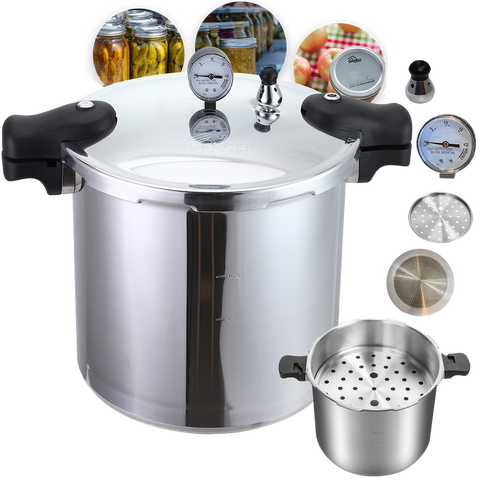
Many pressure canners are designed with one stovetop type in mind, leaving induction users stuck buying separate adapters or giving up on canning altogether. The TANKER 23-Quart Pressure Canner was engineered from the start to work on gas, electric, glass-top, and induction stoves without any special adapters. That kind of universal compatibility is rare, and it's one of the first things that separates this canner from cheaper alternatives.
Safety Features That Go Beyond the Basics
Pressure canning involves high heat and trapped steam, so safety mechanisms aren't a nice-to-have - they're the entire point of choosing quality equipment.
Dual Vents and Locking Handles
The canner includes two emergency safety vents and locking handles that keep the lid securely in place while pressurized. Auto-venting steam also shaves several minutes off the heating phase, which adds up across a full canning season.
Why Redundant Safety Systems Matter
A single point of failure in a pressure canner is a real risk, not a minor inconvenience. Having multiple vents and a locking mechanism means one component failing doesn't compromise the whole system. This layered approach to safety is covered in more depth in this breakdown of the canner's safety features and functionality, and it's a big part of why this particular canning pressure canner earns repeat trust from experienced preservers.
A Canner Is Only One Part of the System
A complete pressure canning setup also depends on compatible racks, pressure-control components, lids, rings, and other preservation supplies.
How It Compares to a Standard Pressure Cooker
Confusion between pressure cookers and pressure canners is common, and it's worth being precise about the distinction, especially since food safety is on the line.
Built for Canning, Not Just Cooking
A pressure cooker is designed to speed up everyday meal prep, while a canning pressure canner is engineered to reach and hold the exact pressure needed to destroy harmful bacteria in low-acid foods. Denali Canning built its equipment specifically around that canning requirement rather than adapting a general kitchen appliance for a job it wasn't designed to do. The full comparison of pressure canner vs. pressure cooker lays out exactly why that distinction matters for anyone canning low-acid foods.
Browse Canning Supplies
Find accessories and preservation supplies that can help round out your pressure canning setup.
Explore Canning Supplies →Capacity, Stacking, and the Right Accessories
Size and flexibility matter just as much as safety once you're trying to process a full batch in one go.
Double-Stacking Without Sacrificing Safety
At 23 quarts, the canner supports double-stacking jars, which effectively doubles your batch size without needing a second canning session. That capacity is only useful if the rest of your setup holds up, which is where compatible lids and rings come in. Choosing the right accessories, covered in this guide to Denali Canning lids , rounds out a setup built to perform consistently across every batch, not just the first one.
Explore Denali's Canning Guides
Read more about pressure canning, equipment, preservation supplies, maintenance, and home food preservation.
Read Canning Guides →The Story Behind the Difference
None of these design choices happened by accident. They came out of a specific goal: building a canning pressure canner that solves the actual frustrations home preservers run into, rather than shipping a generic pot with a lid. The brand story behind Denali Canning explains more about why the company approaches canning equipment this way, and it's a useful read for anyone deciding whether this canner fits their kitchen long-term.
At the end of the day, what makes the Denali pressure canner different comes down to a handful of deliberate choices - universal stovetop compatibility, layered safety systems, a design built specifically for canning rather than general cooking, and enough capacity to make a real dent in a canning season. Those aren't marketing claims so much as practical decisions that show up the first time you actually use one.
Explore the TANKER 23-Quart Pressure Canner
Review the product details, specifications, and features of Denali's pressure canner before choosing your setup.
View the TANKER →FAQs
1. What makes the Denali pressure canner different from other canning pressure canners?
It's built for universal stovetop compatibility, includes layered safety features like dual vents and locking handles, and is designed specifically for the pressure requirements of safe canning rather than general cooking.
2. Can a Denali pressure canner be used on an induction stovetop?
Yes. It's engineered to work on gas, electric, glass-top, and induction stoves without requiring any special adapters.
3. Is a canning pressure canner the same as a pressure cooker?
No. A pressure cooker is designed for faster everyday cooking, while a canning pressure canner is built to reach and hold the specific pressure needed to safely process low-acid foods.
4. How much capacity does the Denali pressure canner offer?
The canner holds 23 quarts and supports double-stacking jars, allowing for larger batches without running a second canning session.
5. What safety features come standard on the Denali pressure canner?
It includes two emergency safety vents, locking handles, and an auto-venting steam system designed to reduce the risk of overpressure.
6. Do I need special lids for the Denali pressure canner?
While it works with standard mason jars, pairing it with compatible lids and rings designed for the canner helps ensure a consistent, reliable seal across every batch.




Comments (0)
There are no comments for this article. Be the first one to leave a message!