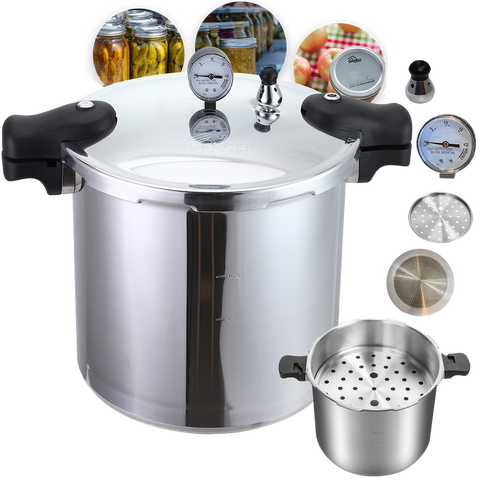
A pressure canner is built for food preservation. It is designed to reach and maintain the precise pressure levels - typically 10 to 15 PSI depending on altitude - required to destroy Clostridium botulinum spores in low-acid foods. It is larger to accommodate quart jars, it has a pressure gauge for verification, and it is engineered to hold steady pressure throughout a processing cycle that can run 25 to 90 minutes depending on what is being canned.
The USDA and the National Center for Home Food Preservation (NCHFP) are clear on this point: a dedicated pressure canner with verified pressure control is required for safely canning low-acid foods. A standard pressure cooker does not qualify.
Quick Decision Guide: Which One Do You Actually Need
You only need a pressure cooker if:
- Cooking speed and convenience are the goal
- You are not home canning at all
- You only process high-acid foods and plan to use water bath canning for those
You need a pressure canner if:
- Canning vegetables, meats, beans, soups, or any other low-acid food
- Canning at altitude where water bath processing is unreliable even for high-acid foods Building a serious home canning pantry that goes beyond jams and pickles
- Can You Use a Pressure Cooker to Can Food
This is the most common question in home canning, and the answer depends on what is being canned.
For high-acid foods - jams, jellies, pickles, fruits - water bath canning is the recommended method and no pressure equipment is needed at all.
For low-acid foods - vegetables, meats, poultry, seafood, beans - the answer from the USDA is no. A standard pressure cooker cannot be counted on to hold the precise, verified pressure levels required throughout a full processing cycle. Even if a cooker reaches the right pressure, it may not maintain it consistently, and unverified pressure during canning of low-acid foods creates a real botulism risk.
The only exception recognized by the NCHFP involves certain tested, larger pressure cookers that function similarly to canners - but these are rare, specific to certain models, and require independent verification before being used for canning.
What About the Instant Pot and Electric Pressure Cookers
Electric multi-cookers - including the Instant Pot - have been the subject of significant debate in the home canning community. The answer from food safety authorities has been consistent: electric pressure cookers are not approved for pressure canning.
The NCHFP has specifically stated that electric multi-cookers, including models marketed for canning, have not been tested and validated for the temperature and pressure consistency required for safe low-acid food preservation. The sealed, insulated design of electric cookers makes it difficult to verify that the internal conditions match what tested canning recipes require.
Weighted Gauge vs Dial Gauge Pressure Canners
For home canners choosing a dedicated stovetop pressure canner, the gauge question comes up early. Both types work. The differences are practical.
A weighted gauge canner uses a physical weight to regulate pressure. When the canner reaches the correct pressure, the weight rocks or jiggles - no reading required, and no calibration needed. This is the more beginner-friendly option and the one that does not require annual testing.
A dial gauge canner shows the exact internal pressure on a numbered dial. It requires more attention during processing to ensure pressure stays within the correct range, and the gauge should be tested annually for accuracy - typically through a local cooperative extension office. The advantage is precise pressure monitoring, which matters most at altitude where pressure adjustments are common.
For most home canners, especially those just starting out, a weighted gauge canner is the lower-maintenance choice. Denali Canning recommends either format paired with the right lids and rings for a complete, reliable setup.
What Denali Canning Recommends for a Complete Setup
A pressure canner is the core piece of equipment for low-acid canning, but it works best as part of a complete system. That means USDA-tested recipes, properly prepared jars, and the right lids and rings for a reliable seal.
Denali Canning lids are designed to work with standard Mason jar sizing - regular mouth and wide mouth - and deliver the consistent seal that pressure canning requires. When a canner is doing its job correctly and the lids are built to spec, the seal is predictable. When one part of that system is unreliable, the whole batch is at risk.
For home canners building out a serious pantry, the combination of a quality stovetop pressure canner and dependable lids from Denali Canning is the starting point that experienced canners consistently return to.
Conclusion
The pressure canner vs pressure cooker question is one that catches a lot of new home canners off guard - and it is worth getting right before investing in equipment or spending a weekend processing jars. A pressure cooker is a great kitchen tool. A pressure canner is the only right tool for low-acid home canning. They are not interchangeable, and the difference matters enough that food safety authorities have made it non-negotiable.
For anyone building a home canning setup that goes beyond water bath basics, starting with a dedicated pressure canner and pairing it with proven supplies from Denali Canning is the foundation that holds everything else together.
Frequently Asked Questions
Can I use a regular pressure cooker for canning?
No. A regular pressure cooker is not safe for canning low-acid foods. You need a pressure canner that is approved for home canning.
What's the difference between a pressure canner and a pressure cooker?
A pressure canner is made for safely preserving food, while a pressure cooker is designed to cook meals quickly.
Can I use an Instant Pot for pressure canning?
No. Instant Pots are not approved for safely canning low-acid foods.
Do I need a pressure canner for water bath canning?
No. A water bath canner is enough for high-acid foods like jams, pickles, and fruits. Pressure canners are only needed for low-acid foods.
Which pressure canner is best for beginners?
A weighted gauge pressure canner is usually the best choice because it's simple to use and doesn't require annual calibration.



Comments (0)
There are no comments for this article. Be the first one to leave a message!