If you've ever stood in a kitchen store staring at two nearly identical appliances wondering, "What's the difference?" ,you're not alone. Pressure cookers and pressure canners look similar, sound similar, and even work on the same basic principle. But using the wrong one for the wrong job can mean the difference between a perfectly preserved pantry and a serious food safety risk.
In this guide, we're breaking down everything you need to know about these two essential kitchen tools ,and helping you figure out which one belongs in your home.
The Basic Principle: How Pressure Works in Both
Both pressure cookers and pressure canners use steam and sealed pressure to raise the internal temperature above the normal boiling point of water (212°F). This is what makes them so powerful ,higher heat means faster cooking and, in the case of canning, the destruction of harmful bacteria like Clostridium botulinum, the cause of botulism.
That's where the similarities end.
What Is a Pressure Cooker?
A pressure cooker is designed for one thing: cooking food fast. It uses high-pressure steam to drastically cut down cooking times. A pot roast that normally takes 3 hours? Done in 45 minutes. Dried beans that need overnight soaking? Ready in 30 minutes flat.
Pressure cookers come in two main types:
- Stovetop pressure cookers ,traditional, reach higher pressures, and cook even faster
- Electric pressure cookers ,like the Instant Pot, more beginner-friendly with preset programs
Pressure cookers are fantastic for weeknight meals, but they are not designed or tested for safe food preservation. Their smaller size, inconsistent pressure regulation, and lack of proper temperature verification make them unsuitable for canning low-acid foods like vegetables, meats, and beans.
What Is a Pressure Canner?
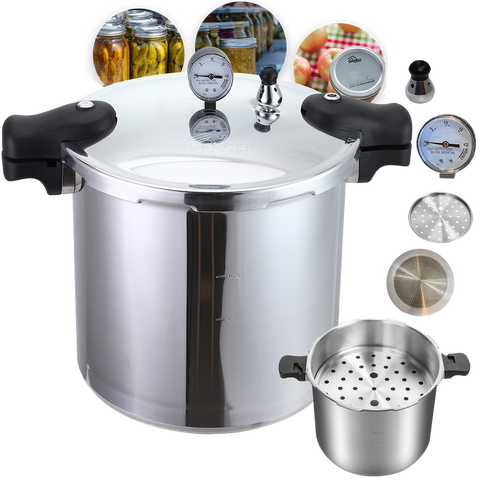
A pressure canner is a large, heavy-duty pot specifically engineered for home food preservation. It is tested and approved by the USDA for safely canning low-acid foods that cannot be processed in a simple water bath canner.
Key features of a pressure canner include:
- Large capacity ,typically holds 7 quart jars or 16–18 pint jars
- Precise pressure gauges ,either dial gauge or weighted gauge for accurate pressure monitoring
- Thick, heavy base ,ensures even heat distribution and stable pressure
- Locking lid with safety vents ,prevents dangerous pressure buildup
When canning low-acid foods, internal temperatures must reach 240°F ,only achievable under pressure. This is non-negotiable for food safety.
Why the Right Lid and Ring Matter Just as Much
Whether you're pressure canning or water bath canning, the seal between your jar and the lid is everything. This is where canning lids regular mouth come into play. Using the correct lid size for your jar ensures a proper vacuum seal ,the foundation of safe, long-lasting home preservation.
For standard Mason jars and most home canning recipes, canning lids regular mouth are the go-to choice. They fit jars with a 2⅜-inch opening and are designed to create an airtight seal when processed correctly. Always use new lids for each canning session ,lids are single-use, even if the bands and jars can be reused.
Pair your lids with quality regular mouth canning rings (also called bands) to hold the lid firmly in place during processing. After the jar cools and the vacuum seal forms, the ring can actually be removed for storage ,the seal holds on its own. Make sure your regular mouth canning rings are free of rust, dents, or warping, as damaged bands can interfere with the sealing process.
Can You Use a Pressure Cooker for Canning?
This is one of the most common questions ,and the answer from food safety experts is a firm no for low-acid foods.
Here's why:
- Size matters ,Most pressure cookers are too small to maintain consistent temperature throughout the jar load
- Pressure inconsistency ,Electric pressure cookers in particular cannot guarantee the sustained 10–15 PSI required for safe low-acid canning
- No USDA testing ,Without tested, validated processing times for specific cooker models, there's no way to confirm food safety
You can use a pressure cooker for high-acid foods like jams and pickles only if it holds at least 4 quart jars and maintains accurate pressure ,but even then, a dedicated canner is always the safer, more reliable choice.
Which One Do You Actually Need?
Here's a simple way to decide:
- You just want to cook faster → A pressure cooker is all you need
- You want to preserve low-acid foods (vegetables, meats, soups, beans) → You need a pressure canner
- You want to do both → Many pressure canners double as large stockpots and can handle some cooking tasks, making them a versatile investment
For serious home preservers, a pressure canner is the better long-term investment. Paired with high-quality canning lids regular mouth, properly sized regular mouth canning rings, and the right jars, you'll have everything you need for a well-stocked, safely preserved pantry.
Final Thoughts
The confusion between pressure cookers and pressure canners is completely understandable but the distinction matters enormously when food safety is on the line. A pressure cooker is a brilliant time-saving cooking tool. A pressure canner is your gateway to year-round food preservation done right.
At Denali Canning, we believe every home preserver deserves the right tools and the right knowledge to preserve food safely and confidently. From the right equipment to the right accessories, getting the basics right makes all the difference.
Start with the right canner, use the right lids, and preserve with confidence ,season after season.



Comments (0)
There are no comments for this article. Be the first one to leave a message!