
A 23 quart pressure canner is one of the most useful tools a home canner can own. It holds enough jars to turn a bushel of green beans or a pot of chicken broth into a full pantry shelf in one afternoon. It also holds a lot of steam, heat, and weight, which is why safety habits matter more with a big canner than with a small pot on the stove. Modern canners come with several layers of built-in protection, and most problems trace back to a few skipped steps rather than faulty equipment. Here are the safety tips worth building into every canning day, from the first inspection to the moment the lid comes off.
Why a 23 Quart Pressure Canner Calls for Extra Care
A larger canner isn't more dangerous by design, but everything about it is bigger: more water, more jars, and more energy stored inside once it's under pressure.
More Jars, More Steam, More Weight
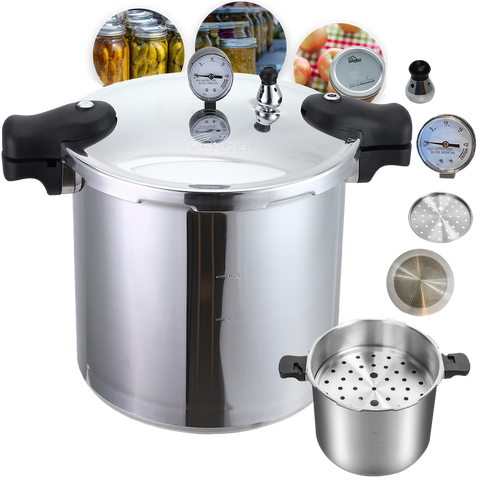
The TANKER weighs about 14 pounds empty. Add several inches of water and a full rack of filled quart jars, and you're handling something far heavier that's close to boiling. Plan where the canner will sit before you start. Load jars with the canner already on the burner, and never carry a full, hot canner across the kitchen.
Built-In Safety Features Are a Backup, Not a Plan
The TANKER uses locking handles that keep the lid shut under pressure, a dial gauge paired with a weighted regulator, an emergency air vent for overpressure release, and a second emergency valve on the left handle. Those features are reassuring, but they're the last line of defense. The habits below keep them from ever having to do their job.
Before You Turn On the Burner
Most pressure canner safety happens before any heat is involved. Five minutes of checking saves a lot of trouble later.
Inspect the Gasket, Vent Pipe, and Safety Valves
Start with the rubber gasket. It should feel soft and flexible, sit evenly in the lid groove, and show no cracks, stretching, or glazed spots. A worn gasket can leak steam and keep the canner from holding steady pressure, so keep a replacement gasket on hand instead of gambling on an old one. Next, hold the lid up to a light and look through the vent pipe. You should see daylight. A vent clogged with food residue is one of the most common causes of pressure problems. Finally, make sure the emergency valves are clean and clear.
Check the Dial Gauge Every Season
The dial gauge should read zero when the canner is cold. If the needle sits above or below zero at rest, don't trust it. Gauges can drift without any visible damage, so have yours tested once a year. Many county extension offices do it for free.
Add the Right Amount of Water
Too little water can boil dry during a long processing time, damaging both the canner and the jars. Too much can push water out of the vent and make pressure harder to manage. Most tested guidelines call for about 2 to 3 inches of water, but your canner's manual has the final word.
Use the Rack Every Time
Jars should never sit directly on the bottom of the canner. A canning rack lets water and heat circulate underneath and keeps glass off the hottest part of the pot, which lowers the risk of a jar cracking mid-batch. If you're stacking pints in two layers, set a second rack between them so the top row sits level.
Loading and Locking the Canner Safely
This is where it's tempting to hurry, especially with hot jars waiting on the counter. Slow down here.
Don't Overfill the Canner
A big canner invites you to squeeze in one more jar. Resist it. Jars should stand upright with a little space between them, and nothing should press against the lid. Overloading blocks steam flow and keeps heat from reaching every jar evenly.
Lock the Lid Properly
Line up the markings on the lid and body, then turn the lid until the handles align and the lock engages. It should close smoothly. If it binds, take it off and check the gasket seating rather than forcing it. Once the canner starts building pressure, never try to adjust the lid.
Vent Before You Pressurize
With the lid locked and the weight off, let steam pour steadily from the vent pipe for a full 10 minutes before adding the regulator, unless your manual says otherwise. Venting pushes trapped air out. Air left inside keeps the temperature lower than the pressure reading suggests, so jars can come out under-processed even when the gauge looks right.
Staying in Control During Processing
Once the canner reaches pressure, your job shifts from setup to steady attention.
Use the Right Regulator for Your Altitude
Processing pressure changes with elevation. For weighted regulators, most tested recipes call for 10 pounds of pressure at 1,000 feet or below and 15 pounds above that. The TANKER ships with a 15-pound regulator attached and a 10-pound weight included, so check your elevation and put the correct one on before heating. Never swap regulators while the canner is under pressure.
Keep the Heat Steady, Not Maxed Out
Use higher heat to reach pressure, then lower the burner gradually once the weight rocks at the rate your manual describes. If pressure drops below the target at any point, bring it back up and restart the processing timer from zero. That's the only way to guarantee the jars got their full time.
Never Leave a Running Canner Alone
Stay in the kitchen while the canner is under pressure. Keep children and pets clear of the stove, and turn handles so nobody bumps them. Processing times run anywhere from 20 minutes to well over an hour, so plan your day around being nearby.
Know What a Safety Valve Release Means
If an emergency vent releases steam, the canner is doing exactly what it was built to do. Turn off the heat, step back, and let it cool completely. Before using it again, find the cause, usually a blocked vent pipe or heat set far too high.
After Processing: The Step People Rush
The timer going off doesn't mean the job is done. Some of the most common burns happen in the last ten minutes.
Let Pressure Drop Naturally
Turn off the burner and leave the canner where it is. Don't move it, run cold water over it, or lift the weight to speed things up. Wait until the gauge reads zero and the lid lock releases, then give it about 10 more minutes before opening. Forcing a canner to cool can cause jars to lose liquid, fail to seal, or crack.
Open the Lid Away From You
Remove the weight, open up the lid, and lift the far side first so steam rolls away from your face and arms. Oven mitts make this step far more comfortable.
Lift Jars Straight Up and Leave Them Alone
Use a jar lifter and keep each jar upright as it comes out. Tilting a hot jar can disturb the seal before it sets. Set jars on a towel away from drafts and leave them undisturbed for 12 to 24 hours.
Pressure canner safety mostly comes down to a short routine done the same way every time: inspect, fill correctly, vent, hold steady pressure, and let it cool on its own. Denali Canning builds its canners and canning gear with layered safety features for that reason, but the habits are what keep every batch calm and predictable. Check the gasket, read your manual once more, and get back to filling that shelf.
FAQs
1. Is a 23 quart pressure canner safe for beginners?
Yes, as long as you follow the manual and a tested recipe. Modern canners include locking lids, pressure gauges, and emergency vents. The bigger size means more jars per batch, not more risk when it's used correctly.
2. How much water goes in a pressure canner?
Most tested guidelines call for about 2 to 3 inches, but always follow your canner's manual. Too little water can boil dry during long processing times, while too much makes pressure harder to control.
3. Why do I need to vent the canner before adding the weight?
Venting pushes trapped air out. If air stays inside, the temperature ends up lower than the pressure reading suggests, and jars can be under-processed. Ten minutes of steady steam is the standard for most canners.
4. What should I do if pressure drops during processing?
Bring the canner back up to the correct pressure, then restart the processing time from the beginning. Jars need the full, uninterrupted time at pressure, so partial time doesn't count.
5. Can I cool the canner faster with cold water?
No. Forcing a canner to cool can make jars lose liquid, fail to seal, or crack. Let pressure drop naturally, then wait about 10 more minutes before opening the lid.
6. How often should I replace the gasket and test the gauge?
Check the gasket before every canning session as part of basic pressure canner safety, and replace it when it looks cracked, stiff, or stretched. Have a dial gauge tested at least once a year




Comments (0)
There are no comments for this article. Be the first one to leave a message!