There is something quietly satisfying about lining up jars on the counter at the end of a long day in the kitchen. Soup, salsa, beans, soft fruit, broth, and tomatoes, all sealed up and ready for the months ahead. But anyone who has been canning for more than a season knows the same truth. The right canning pressure canner is what separates a smooth afternoon from a frustrating one.
Whether you are brand new to home canning or have been preserving for years, the equipment you choose matters. And the difference between a reliable canner and a so-so one shows up the moment you start working with low-acid foods, larger batches, or recipes that need precise pressure to be safe.
Why a Pressure Canner Is Different From a Regular Pot
People sometimes confuse a pressure canner with a water bath canner or a regular stockpot. The difference is real & it matters.
A water bath canner works for high-acid foods like jams, jellies, pickles, and most fruit. A canning pressure canner is required for low-acid foods such as vegetables, soups, broths, beans, and meats. The high temperatures created under pressure are what eliminate bacteria that boiling water alone cannot reach.
Skipping the right tool here is not just inconvenient. It can compromise food safety. A real pressure canner is built to hold steady pressure, vent properly, and lock down with the kind of seal that makes home canning genuinely safe and shelf stable.
What to Look for in a Quality Pressure Canner
Not every canner sold online is built to the same standard. When you are choosing one, a few details separate the dependable models from the ones that frustrate people after a few uses.
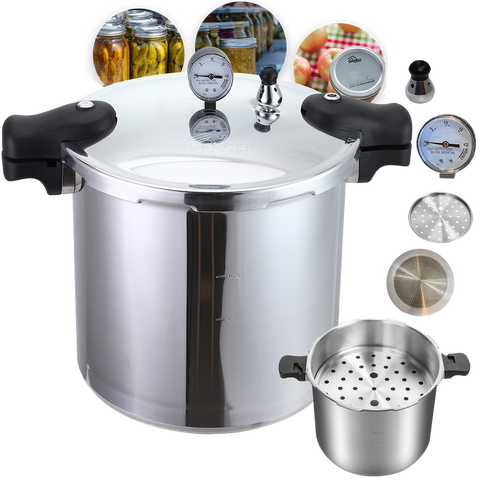
Capacity is the first thing to think about. A larger pressure canner means fewer batches, which matters during peak garden season when tomatoes and beans are coming in faster than you can process them. A solid mid to large size canner usually fits 7 quart jars or up to 18 to 24 pint jars at once.
Material matters too. Heavy-gauge aluminum heats evenly and lasts for years without warping. The lid should lock securely, the gasket should seal cleanly, and the pressure gauge or weight should be easy to read and trust. Bonus points for canners that work on multiple stove types, including induction in some models.
Finally, look for clear markings, simple controls, and an instruction manual that does not assume you have been canning for thirty years. The right canner respects beginners and pros alike.
Stocking the Right Canning Items Around It
A great pressure canner is the centerpiece, but the supporting canning items are what make the entire process smooth.

Mason jars in pint, quart, and half-gallon sizes are the foundation. Lids and bands should be fresh, since reusing old lids is one of the most common reasons for failed seals. A jar lifter, magnetic lid wand, canning funnel, and bubble remover round out the essentials and save your hands and counters in the process.
For longer canning sessions, a good kitchen towel set, a labeled marker for jars, and clear shelf storage make the difference between organized pantry rows and a frustrated hunt for last summer's tomato soup.
Buying a canner alongside the right canning items as a complete setup is often the smartest move, especially for first-time canners who do not yet know what they will actually use.
Pressure Canner Sale: When to Buy and Why It Matters
Timing your purchase well can mean real savings. The best pressure canner sale windows usually fall just before peak garden season, around tax refund time, or near major shopping holidays. Smart canners watch for these moments and stock up while prices are right.
A sale is also a good chance to upgrade. If you have been working with an older canner that has hairline cracks, a worn gasket, or a gauge that no longer reads accurately, a sale window is the right time to retire it. Safety always comes before sentimentality with this kind of equipment.
Buying during a sale also makes it easier to round out the rest of your kit at once. A new canner, fresh lids, a jar lifter, and a proper rack can all land in your kitchen for less than the cost of replacing pieces one by one over a season.
Why Home Canning Is Worth the Effort
Beyond saving money on groceries, home canning gives you control over ingredients, freshness, and waste. You decide the salt levels. You decide what goes in. You decide whether to use fresh garden tomatoes or pick up a bulk box from the local farm stand at peak ripeness.
There is also something genuinely calming about the rhythm of canning. The clean jars, the simmering pot, the satisfying ping of a sealed lid an hour later. It connects you to the kitchen in a way that grocery store shopping never quite matches.
And once your shelves start filling up, the cost savings show up too. Soup that costs four or five dollars per can at the store goes into a jar for a fraction of the price. Multiply that by a season's worth of canning, and the math gets very real very quickly.
Conclusion
A good canning pressure canner is more than a kitchen tool. It is the foundation for a pantry full of food you trust, made on your terms, and ready when you need it. Pair it with the right canning items, watch for a smart pressure canner sale, and the whole process becomes faster, safer, and more rewarding. Denali Canning has built its reputation around exactly this kind of thoughtful, dependable equipment, designed for everyday home canners who want their jars to seal right the first time, every time.
Frequently Asked Questions
Why do I need a pressure canner instead of a water bath canner?
A pressure canner reaches higher temperatures, making it safe for low-acid foods like vegetables, beans, soups, and meats. Water bath canning only works safely for high-acid foods.
What size pressure canner should I buy?
Most home canners do well with a model that holds 7 quart jars or up to 24 pint jars. Larger sizes save time during heavy garden harvest seasons.
When is the best time to find a pressure canner sale?
Sales usually happen before peak garden season, around major shopping holidays, and during seasonal clearance windows. Watching these times can help you save money.
What other canning items do I need to start?
You will need mason jars, fresh lids and bands, a jar lifter, canning funnel, magnetic lid wand, and a bubble remover for a complete canning setup.
Can I reuse old canning lids each season?
No, lids should always be new for safe sealing. Bands can be reused, but reusing old lids can lead to failed seals and spoiled food.



Comments (0)
There are no comments for this article. Be the first one to leave a message!