
Harvest season arrives fast, and the last thing you want mid-batch is to realize you are missing a lid, a funnel, or a jar lifter. Whether you are putting up your first jar of tomatoes or your hundredth batch of peach jam, the quality and completeness of your canning supplies determines everything — from seal reliability to food safety to how smoothly your entire session runs. Here are the ten essential items every serious home canner needs stocked and ready this season.
Mason Jars in Multiple Sizes
Your jars are the foundation of every canning session. Half-pint, pint, and quart sizes cover the full range of preserving needs — from jams and jellies to whole tomatoes and soups. Always inspect every jar before use for chips, cracks, or cloudiness along the rim. Even a hairline crack will prevent a proper seal and compromise food safety.
Canning Lids and Rings
Fresh lids are non-negotiable for every batch. The sealing compound on each lid is designed for a single use — reusing lids from previous seasons dramatically increases seal failure risk. Quality canning lids and rings should be sourced from a trusted supplier and inspected before every use. Stock at least three to four dozen lids per jar size you regularly use so you are never caught short at the height of harvest.
Water Bath Canner
For high-acid foods — jams, jellies, pickles, tomatoes, and most fruit preserves — a water bath canner is your primary processing vessel. A large enamel or stainless steel pot with a fitted rack keeps jars off the bottom of the pot and allows full water circulation during processing. Ensure your canner is large enough to cover jars with at least one inch of water above the lid.
Pressure Canner
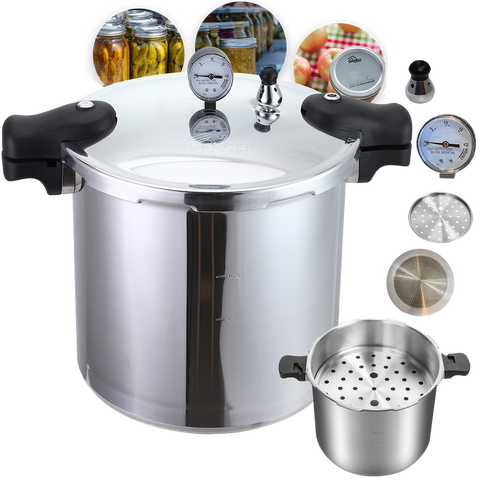
Low-acid foods — vegetables, meats, beans, and poultry — require a pressure canner to reach the temperatures necessary to eliminate botulism risk. This is not optional equipment for these food types. A quality pressure canner is a long-term investment that pays for itself across seasons and is absolutely essential for anyone who wants to preserve a full range of foods at home safely.
Jar Lifter
A jar lifter is one of those tools that seems optional until the first time you try to remove a scalding hot jar from boiling water without one. The rubberized grip and extended handle keep your hands safely away from the heat and give you secure, confident control over every jar you pull. Do not attempt serious canning without one.
Wide-Mouth Canning Funnel
A canning funnel transforms filling jars from a messy, imprecise task into a clean and efficient one. It ensures your headspace stays consistent, prevents food from contaminating the jar rim (which can compromise the seal), and significantly speeds up high-volume sessions. A basic tool that makes an outsized difference in both cleanliness and seal success rates.
Headspace Measurement Tool
Correct headspace — the gap between the food surface and the lid — is critical for safe processing and reliable sealing. Too little headspace prevents proper vacuum formation. Too much leaves excess air that can cause spoilage. A headspace measuring tool removes guesswork and takes seconds to use, making it one of the most underrated items in any canner's kit.
Bubble Remover and Debubbler
Air bubbles trapped in your jars displace liquid, affect headspace accuracy, and can create pockets where spoilage develops. A debubbler — typically a thin plastic or wooden tool — is run around the inside of the filled jar before lidding to release trapped air. Simple, inexpensive, and consistently overlooked by beginners who then wonder why their seals fail.
Kitchen Scale and Accurate Thermometer
Canning is a science as much as an art. Recipes are tested at specific weights and temperatures, and deviating from them affects both flavor and safety. A digital kitchen scale for accurate ingredient measurement and a reliable thermometer for temperature monitoring are not optional for anyone who takes food safety seriously. They are the difference between guessing and knowing.
Labels, Markers and Storage Supplies
A beautifully sealed jar with no label is a mystery waiting to happen six months later. Water-resistant canning labels and a permanent marker are the final step in every session — recording the contents and date so your pantry stays organized and you always know what is newest. Good organization also helps you rotate stock properly and use preserved food before it reaches its shelf-life limit.
Why Lids and Rings Deserve Special Attention
Of all the items on this list, your lids and rings for canning deserve the most careful attention before every session. A failed seal is not always visible until you open a jar months later — by which point the food may be unsafe to eat and the entire batch is wasted. Quality lids with a consistent sealing compound, sourced from a brand you trust, are the single highest-leverage item in your entire canning setup.
Rings should be checked for rust, dents, and warping before every use. Even minor deformities can prevent the lid from sitting flat against the jar rim during processing. Remember that rings do not create the seal — the lid compound does. Once your jars have cooled and sealed, the rings can actually be removed for storage without compromising the vacuum seal already formed.
Warm Your Lids
Simmer lids in hot water before use to soften the sealing compound for a more reliable seal.
Fingertip Tight Only
Over-tightening rings prevents proper venting during processing and can cause seal failures.
Cool Undisturbed
Let sealed jars rest for 12 to 24 hours without moving them to allow vacuum seals to form fully.
How to Build Your Canning Equipment and Supplies Inventory
The most experienced home canners treat their canning equipment and supplies like a professional kitchen — stocked, organized, and audited before each season begins. A seasonal audit takes less than 30 minutes and prevents the most common mid-session emergencies: running out of lids, discovering a cracked jar mid-fill, or realizing your jar lifter broke since last summer.
Pre-Season Canning Supply Audit Checklist
- Inspect all jars — discard any with chips, cracks, or rim damage
- Count existing lids per jar size — restock to 3 to 4 dozen per size
- Check rings for rust, dents, or warping — replace as needed
- Test jar lifter grip — replace if rubber is cracked or grip is weak
- Verify pressure canner gasket and safety valve are in good condition
- Stock labels and permanent markers for the season ahead
- Review and refresh any depleted pantry staples like pectin and vinegar
"A well-stocked canning station is the difference between a season of effortless preserving and a season of avoidable frustration. Prepare once. Preserve all season long."
Denali Canning — Preserve with ConfidenceStock Up Before the Season Peaks
Fresh produce arrives fast and waits for no one. The canners who have their supplies fully stocked before harvest season begins are the ones who can act immediately when tomatoes come in ripe, peaches are at their peak, or the garden delivers a bumper crop. Waiting until you need supplies creates delays, rushed orders, and the very real risk of missing the optimal window for your best produce.
At Denali Canning, every product in our range is selected with the serious home canner in mind — from BPA-free lids and rust-resistant rings to trusted equipment that performs session after session. Our complete collection of canning supplies has everything you need to build a fully stocked, season-ready preservation station. Stock up now, and preserve with confidence from the first jar to the last.
- Complete range of canning supplies, lids, rings, jars, and equipment
- BPA-free lids with consistent sealing compound for reliable results
- Regular and wide mouth options across all major jar sizes
- Bulk and individual pack options available for every canning scale
- Trusted by home canners across the country season after season
Ready to Stock Up for Canning Season?
Shop the complete Denali Canning collection and get everything you need for a successful, stress-free canning season.
Shop Canning Supplies




Comments (0)
There are no comments for this article. Be the first one to leave a message!