
Buying your first canning pressure canner feels bigger than it is - until you get it wrong. The wrong size, the wrong gauge, a burner your stove can't handle. Hours of prep, jars loaded, and then nothing seals. That's a bad day nobody wants.
The truth is, most first-time buyers don't fail because they chose a bad brand. They fail because nobody walked them through what actually matters before they spent the money. Choosing the right pressure canner for sale comes down to a few specific decisions - size, gauge type, stove compatibility, and safety features. Get those four right and the rest takes care of itself.
Here's how to get them right.
What a Pressure Canner Actually Does
A pressure canner isn't just a big pot with a lid. It builds and holds steam pressure above boiling point - typically 240°F - which is the only temperature that kills botulism spores in low-acid foods like green beans, corn, meat, and soups. Water bath canning tops out at 212°F. That gap matters. It's the difference between safe food on your shelf and a serious health risk. If you're canning anything low-acid, a proper canning pressure canner isn't optional. It's the whole game.
Dial Gauge vs Weighted Gauge: Which One Is Right for You
Both gauges regulate pressure, but they work differently and suit different canners.
A dial gauge shows you exact PSI on a readable dial face. You get precise readings, which is useful if you live at high elevation and need to adjust pressure by specific PSI increments. The trade-off is that dial gauges need annual testing - most county extension offices offer this free - and they can drift out of calibration without warning.
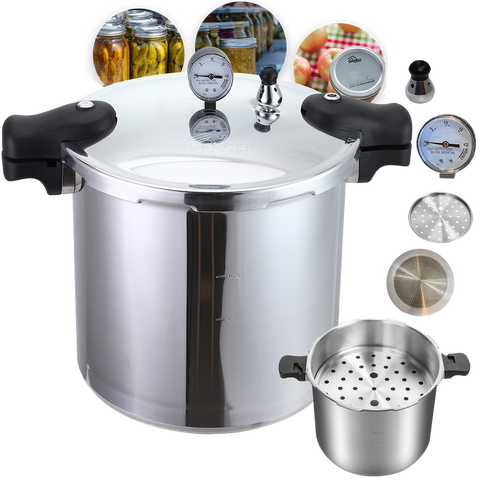
A weighted gauge is simpler. You load the weight to the right PSI setting, and when pressure builds correctly, the weight jiggles or rocks. No reading required. No calibration. Just a steady jiggle that tells you everything is running right. For beginners, this is often the smarter choice. Less to overthink. Less to go wrong. Denali Canning's Tanker model uses a dual system - dial gauge plus weighted regulator - which gives you the precision of both without having to choose.
What Size Pressure Canner Do You Need
This is where most people make the mistake that costs them time and frustration. A large pressure canner seems like the obvious pick, but bigger isn't always better if your stove can't support the weight or your batches are small.
Here's a practical guide by family size and batch volume:
-
Small households (1–2 people): A 16–21 quart canner fits 7 quart jars or 10 pint jars. More than enough for small harvests or first-time canners.
-
Medium households (3–5 people): A 22–23 quart large pressure canner is the sweet spot. Holds 7 quarts comfortably and is manageable on most standard stoves.
-
Large households or homesteaders processing in volume: Go 30 quarts or larger. You'll need to confirm your burner supports the BTUs required, especially on glass-top stoves.
- Denali's Tanker works on gas, electric, glass-top, and induction - a rare combination that removes stove compatibility as a variable entirely.
Stove Compatibility: Don't Skip This Step
Glass-top and induction stoves have a reputation for giving canners trouble, and that reputation is partly earned. Heavy canners can crack a glass cooktop if the base isn't flat. Most manufacturers will void your stove warranty if damage occurs from a non-flat-bottom canner.
Before you search "pressure canner for sale," check your stove type and confirm the canner's base is smooth and flat. Coil, gas, and induction stoves are generally more forgiving. Glass-top requires a flat-bottomed, lighter canner or an explicit manufacturer clearance.
Safety Features Worth Looking For
Not all canners are built the same, and the safety features on a pressure canner aren't marketing fluff. They're protecting you from a real amount of steam and pressure.
Look for:
-
Locking handles that won't open while pressurized
-
Dual safety vents that release excess pressure automatically
-
A pressure gauge or weighted regulator that gives you a visible or audible signal when pressure is correct
-
An overpressure plug as a last-resort safety release.
- The Denali Tanker includes all of these. If a canner you're evaluating skips any of them, that's a reason to pause.
Where to Find Pressure Canner Sale Prices Without Compromising Quality
A pressure canner sale is worth chasing, but not at the expense of safety or durability. Cheap, unlisted canners without tested safety ratings are common online, and the savings aren't worth the risk. Stick to brands with documented safety features, real customer reviews, and a warranty you can actually use.
Denali Canning offers free shipping on orders over $50, and the Tanker comes with everything included - no extra accessories required to get started.
Ready to Start Canning With Confidence?
The Denali Tanker pressure canner works on every stove type. Free shipping over $50.
Shop Denali Canners →Pressure Canner vs Pressure Cooker: The Difference That Matters
This confusion trips up more beginners than anything else. A pressure cooker is designed for speed - it cooks food fast under pressure. It is NOT designed to hold precise, stable pressure for the 20–90 minute processing times that safe canning requires. Many pressure cookers don't have a rack, the right gauge, or the tested pressure accuracy that USDA-approved canning processes require.
Use a dedicated pressure canner for canning. Every time.
The Bottom Line on Choosing a Pressure Canner
Getting the right pressure canner comes down to four decisions: the right size for your household, the right gauge for your elevation and experience level, a base your stove can actually handle, and safety features you can trust under real pressure.
Skip any one of those and you're setting yourself up for a frustrating first season.
The Denali Tanker checks every box - 23 quarts, dual gauge system, universal stove compatibility, and double safety vents built in. It ships with everything you need to start canning immediately, with free shipping on orders over $50.
Pick the right canner once. Can with confidence every season after.



Comments (0)
There are no comments for this article. Be the first one to leave a message!