
You followed the recipe perfectly. You measured every ingredient, processed the jars, and waited. Most of them popped. But three jars on the counter never sealed — and now you are standing there wondering exactly where it went wrong.
The recipe was not the problem. It almost never is. In most failed batches, the issue traces back to the canning items: a lid past its prime, a jar rim with a hairline nick, or canning materials that quietly degraded in a drawer between seasons.
This post breaks down exactly why that happens, how to spot the signs before your next batch, and what to do about it so the work you put into your harvest actually makes it to the pantry shelf.
Why Your Jars Did Not Seal — And It Was Not the Recipe
Seal failures feel random, but they are not. Every unsealed jar has a cause, and that cause is almost always something physical — a dirty rim, a reused lid, incorrect headspace, or a canner that did not hold temperature through the full processing time.
According to the University of Minnesota Extension, none of the most common seal failure causes are recipe-related. They are equipment and material failures that happen before the food ever becomes the issue.
Understanding this matters because it changes where you focus your energy. You do not need a better recipe. You need gear and supplies that actually do their job.
Sound familiar?
Cloudy brine. Jam that never set. Lids that flex when you press them. These are not signs of a bad cook — they are signs that one or more of your canning materials or tools let the batch down. Every single one of these problems has a fixable cause.
The Specific Canning Materials That Quietly Ruin a Batch
Here is the part most people skip. The canning materials you use — lids, bands, jars, salt, vinegar, and pectin — each have a specific job. When one is off, even slightly, the whole batch pays for it.
Old or leftover lids from last season
This is the most common cause of seal failures. The sealing compound in canning lids is a one-time-use material. Once compressed, it will not form a reliable seal again. If you grabbed lids from a half-used box in the back of your pantry, that is likely where your unsealed jars came from.
Vinegar that is not at 5% acidity
If your pickles came out soft, cloudy, or just off-tasting despite following the recipe, check your vinegar. Pickling recipes are calibrated for exactly 5% acidity. A cheaper or unlabeled vinegar changes the pH of your brine, which affects both safety and texture in ways no processing time can fix.
Table salt instead of canning salt
If your brine went dark and cloudy and you used table salt, that is your answer. Table salt contains iodine and anti-caking agents that interfere with fermentation and cloud the liquid. The food may still be safe, but it looks and tastes wrong — and it did not have to.
Pectin that has been open or stored too long
You cooked the jam, processed the jars, waited 24 hours, and it never set. If the recipe was tested and you measured correctly, the pectin is the likely culprit. Pectin stored past its date or exposed to humidity loses its gelling ability before you even open the box.
A jar rim you did not notice was chipped
A hairline chip on the jar rim breaks the vacuum seal before it even has a chance to form. Most people do not check every jar before every session, and one bad jar in a canner load can throw off the entire batch. Run your finger around each rim before you fill — every time.
Why Equipment Quality Changes the Outcome
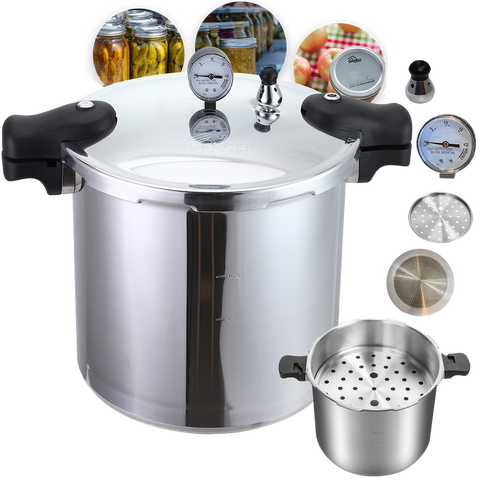
Beyond consumable materials, the quality of your core equipment determines how consistently your process performs. Two canners running the same recipe can get completely different results if one is using a pressure canner with an inaccurate gauge and the other is not.
Pressure canner gauges should be tested annually. An inaccurate gauge means you think you are processing at 10 PSI when you are actually running at 8 PSI. That two-pound difference can mean the difference between safely processed low-acid vegetables and a product that has not reached a safe internal temperature.
Water bath canners need to maintain a full rolling boil throughout processing. A thin-bottomed pot loses heat unevenly, drops temperature when jars are added, and recovers slowly. The recipe calls for 10 minutes of processing. What actually happens is 10 minutes of inconsistent heat that does not match what the recipe was tested on.
These are not edge cases. They are everyday scenarios for canners who invest in produce and recipes but treat their equipment as an afterthought. For a full breakdown of what gear actually moves the needle, the post on essential canning supplies covers what experienced home preservers prioritise before each season.
The Canning Items Worth Spending More On
Not every piece of equipment needs to be premium. But the tools directly involved in food safety and seal integrity are not the place to cut costs.
Lids matter most. Buy new lids every season from a supplier you trust. The sealing compound needs to be consistent, flexible, and free of defects. Bulk packs from unknown sources introduce variability that shows up as seal failures two months after processing — long after you have eaten through the jars that did seal and forgotten about the batch.
Jars are a long-term investment. Quality mason jars rated for canning will last years when handled correctly. The upfront cost is higher than that of repurposed commercial jars, but repurposed jars are not engineered for the thermal stress of processing and carry a genuine risk of cracking or failing to seal.
BPA-free materials are not optional in 2026. The health-conscious buyer expects it, and for good reason. Lids with BPA-free sealing compounds are the standard now. If your current supplier has not made this a clear part of their product specifications, that tells you something about their standards overall.
Before Your Next Batch: What to Check Right Now
If something went wrong in your last session, one of these is almost certainly why. Go through this list before you process another jar and you will catch the problem before it costs you another batch.
- Inspect every jar rim by running your finger around the full circumference. Any chip, crack, or rough spot means the jar gets retired from canning.
- Check bands for rust, dents, or warping. A warped band will not apply even pressure to the lid during processing and increases the chance of seal failure.
- Never reuse flat lids. If the lid was used in a previous canning session, the sealing compound has already compressed and will not form a reliable vacuum a second time.
- Check expiration dates on all dry canning materials — pectin, citric acid, and canning salt. Toss anything that has been stored past its date or exposed to humidity.
- Have your pressure canner gauge tested at your local cooperative extension office before the season begins. Testing is usually free and takes minutes.
- Confirm your vinegar is at 5% acidity before using it in any pickling recipe. Check the label — not all vinegars list this clearly, and unlabeled acidity levels are a red flag.
Getting your gear right is a one-time fix that pays off every single season. If you are ready to stop troubleshooting batches after the fact, Denali Canning carries BPA-free lids, tested canning supplies, and the tools that take the guesswork out of every jar you process.
Frequently Asked Questions
Can bad canning items ruin a good recipe?
Yes, and it happens more often than most home canners realize. A defective lid, a cracked jar rim, or degraded supplies will cause seal failures and spoilage regardless of how precisely you followed the recipe.
How often should I replace my canning materials?
Flat lids should be replaced every single season since they are single-use. Dry canning materials like pectin and citric acid should be replaced if they are past their expiration date or have been exposed to humidity, typically within one to two years.
Why does the quality of canning items affect food safety?
Canning safety depends entirely on achieving and maintaining an airtight vacuum seal. Substandard gear introduces variables that prevent the seal from forming correctly, which allows air and bacteria back into the jar during storage.
Are BPA-free canning materials worth the price difference?
BPA-free lids and preservation supplies are the current standard for home food preservation and should not be considered a premium upgrade. If a supplier's products do not clearly specify BPA-free materials, that is a reason to find a different supplier.
What canning items should I never cut corners on?
Never cut corners on lids, jars, or your canner. These three are directly responsible for food safety and seal integrity. Everything else has more flexibility, but compromising on these three creates real risk.



Comments (0)
There are no comments for this article. Be the first one to leave a message!