
There is something deeply satisfying about opening a jar of homemade peach jam in winter, or pulling a perfectly preserved batch of garden tomatoes off the shelf long after harvest season has ended. But behind every successful preserve is something most people overlook the quality of your canning supplies.
From the jar itself to the pot you process in, every single tool plays a role. And at the center of it all? Your canning lids & rings. These small, humble components are your first and last line of defense against spoilage, contamination, and food waste. Get them right and your pantry is protected for months even years. Get them wrong and even the best harvest goes to waste.
Why Your Canning Supplies Are More Important Than You Think
Home canning is a science as much as it is an art. The U.S. Department of Agriculture estimates that improper sealing is responsible for the vast majority of home canning failures. And what causes an improper seal? Almost always it comes down to the quality and condition of your canning lids & rings.
A lid that fails to seal properly allows air and microorganisms to enter your jar. This can lead to mold, fermentation, or in serious cases, the development of Clostridium botulinum the bacteria responsible for botulism. This is not something to take lightly. Investing in the right equipment from the start is not a luxury. It is a necessity.
"Great preservation starts with great supplies. The seal is where your effort either holds or fails. Choose quality once and trust it every single batch."
How Canning Lids & Rings Actually Work
Understanding the mechanics behind your lids and rings helps you use them with confidence and helps you identify exactly what goes wrong when a seal fails.
The Most Common Lid & Ring Mistakes and How to Avoid Them
Many home canners unknowingly sabotage their results with small, entirely preventable errors. Here is what to watch out for:
- Reusing single-use lids — Flat lids are designed for one processing cycle only. The sealing compound loses its bonding integrity after the first use.
- Overtightening rings — Finger-tight is the rule. Over-tightening traps air inside the jar and prevents a proper vacuum from forming.
- Using old or dented lids — Even a hairline dent in the sealing edge is enough to cause failure. Always inspect lids before use.
- Skipping the warm-up step — Lids should be warmed in hot (not boiling) water before placement to activate the sealing compound.
- Dirty or chipped jar rims — Always wipe the rim clean before placing the lid. Any food residue can break the seal.
- Leaving rings on during storage — Remove rings after 24 hours. Rings left on during storage can hide a failed seal and encourage rust.
Building a Complete, Safe Set of Canning Supplies
Lids and rings are the heartbeat of a good seal, but they work best when everything else in your setup is equally reliable. Think of your canning supplies as an ecosystem every piece supports the others.
Water Bath Canner
For high-acid foods jams, pickles, fruit preserves, and tomatoes. Reaches 212°F, enough for safe processing of acidic recipes.
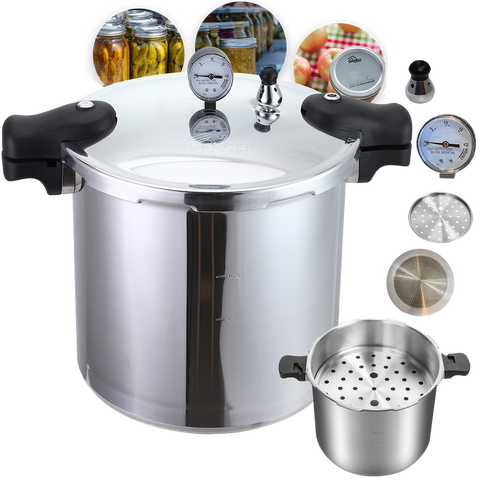
Pressure Canner
Essential for low-acid foods vegetables, meats, soups, and beans. Reaches 240°F+ under pressure to destroy harmful bacteria.
Quality Mason Jars
Always inspect rims for chips before use. A compromised rim means a compromised seal, no matter how good your lids are.
Essential Tools
Jar lifter, wide-mouth funnel, bubble remover, and magnetic lid wand. These protect your lids and your results.
Lid & Ring Types at a Glance
| Type | Mouth Size | Reusable? | Best For |
|---|---|---|---|
| Standard Flat Lid | Regular & Wide | Lids: No / Rings: Yes | All canning methods |
| Regular Mouth Lid & Ring | 2⅜ inch | Rings reusable | Jams, jellies, sauces, pickles |
| Wide Mouth Lid & Ring | 3 inch | Rings reusable | Whole fruits, vegetables, meats |
| Reusable Lids (e.g. Tattler) | Both sizes | Yes lids & rings | Canners wanting zero-waste option |
Stock both regular and wide mouth canning lids & rings in your pantry before canning season begins. Running out mid-batch especially when produce is at peak ripeness is one of the most frustrating and avoidable problems in home canning.
Year-Round Food Safety: What to Check Before You Open a Jar
Proper sealing during processing is only half the equation. How you store and inspect your jars afterward is equally important for year-round food safety.
Before opening any stored jar, always check: Is the lid still concave and firm not flexing up and down? Is there any off smell, unusual color, or visible mold when you open it? Does it look and smell like it should? When in doubt throw it out. No meal is worth a compromised seal.
Aim to consume home-canned goods within 12 to 18 months for best flavor and nutrition, even when properly sealed. Rotate your pantry stock regularly use the oldest jars first and restock from each new canning season.
Ready to Preserve with Confidence?
Denali Canning offers premium canning lids & rings, pressure canners, and everything in between built for home canners who take safety seriously. Trusted by 125,000+ canners across the USA & Canada.
Shop Canning Supplies →Why Supply Quality Matters More Than Price
Not all canning supplies are created equal. The difference between a budget lid and a properly manufactured one often comes down to the thickness of the sealing compound, the quality of the metal, and the consistency of production. A low-quality lid may seal under ideal conditions but fail under any variation in headspace, processing time, or storage temperature.
That is why sourcing from a trusted supplier matters not just once, but every single season. At Denali Canning, every product is designed with this standard in mind. Explore the full range at Denali Canning and stock your pantry with supplies you can trust all year long.




Comments (0)
There are no comments for this article. Be the first one to leave a message!