
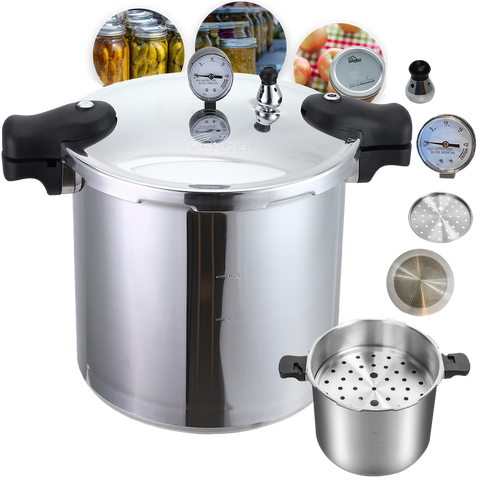
The Tanker™ by Denali is a 23-quart pressure canner designed for home canners who want a large, steady pot with several layers of built-in safety. The original short guide on this page listed the core features: a 23-quart capacity that can double-stack jars, an induction-compatible base, a pressure gauge, safety valves, and a pressure cylinder that helps regulate pressure automatically. The notes below stay with what Denali has already published on The Tanker's product and how-to pages.
What You Get with The Tanker
Denali's product guide for The Tanker 23-Quart Pressure Canner & Cooker lists a heavy-gauge aluminum and stainless-steel canner, a pressure gauge, two pressure regulators (a 15-pound regulator attached and a 10-pound regulator included), a canning rack, a 24-pack of Denali lids (12 wide-mouth and 12 regular-mouth), a safety and operations manual, and warranty registration information. The same guide describes safety locking handles that are meant to prevent the lid from opening while the canner is under pressure, and PreserveLock Technology, a Denali feature added as an extra layer of pressure safety.
Stovetop Compatibility
The original article noted that The Tanker works on gas, sealed plate, electric, ceramic, halogen induction, and electric coil stovetops, with an induction-compatible base. Denali's longer stovetop guide explains why that matters: the canner has to sit fully flat on the burner, and many stove makers ask that the pot's base not extend more than about an inch past the burner in any direction. A flat, heavy base helps the pot heat evenly. Getting up to pressure is only half the job. The burner then has to hold that heat for the full processing time, which can run past 90 minutes for larger cuts of meat or a full load of low-acid vegetables.
Weights, Elevation, and a Tight Valve Stem
The Tanker comes with 10 lb and 15 lb weights. The 15 lb weight has a smaller hole, and it sits on the valve stem. Denali's weights tutorial stresses two practical points: choose the weight that matches your elevation by consulting an elevation chart, and make sure the valve stem is tightly secured so water does not leak during the run. This guide does not add elevation cutoffs that are not already stated on that tutorial.
Safety Habits for a 23-Quart Canner
Denali's 23-quart safety guide is the reference for day-of habits. Follow the water level in your canner's manual. Most tested guidelines call for about 2 to 3 inches of water, because too little can boil dry and too much makes pressure harder to control. Vent the canner before adding the weight so trapped air can leave. Ten minutes of steady steam is the standard on most canners. If pressure drops during processing, bring the canner back up to the correct pressure and restart the processing time from the beginning. Do not cool the canner with cold water. Let pressure drop naturally, then wait about 10 more minutes before opening the lid. Check the gasket before every session and replace it when it looks cracked, stiff, or stretched. If your canner uses a dial gauge, have it tested at least once a year.
Double Stacking, Within Tested Limits
The Tanker is roomy enough to double-stack jars, and Denali has tested that setup with pint jars. USDA and National Center for Home Food Preservation guidance permits stacking in two layers only for pint jars or smaller, and only with a rack between the layers so steam can move around each jar. Quart jars stay in a single layer, because published processing times for quarts assume that setup.
Cleaning and Storage
Discoloration or rust from regular use is normal and can be cleaned. Denali's Tanker cleaning guide uses 2 tablespoons of cream of tartar for every half gallon of water, brought to a boil in the canner and left to simmer so residue loosens. For the valve and weight, white vinegar and a scrubber remove rust or discoloration. Rinse thoroughly and air dry before reassembling. The product care guide also says to wash with warm, soapy water, avoid abrasive tools, let the canner air dry, and store it with the lid off so moisture and odors do not collect.
Always follow the safety and operations manual that ships with The Tanker, and match processing times to a current, tested recipe from a trusted source such as USDA or NCHFP. Shop The Tanker and Denali canning lids when you are ready to outfit a canning day.




Comments (0)
There are no comments for this article. Be the first one to leave a message!