
Home canning has made a strong comeback among home cooks who want more control over what goes into their food, less waste from seasonal produce, and a pantry that reflects real effort. But like any kitchen craft, results depend heavily on having the right tools for the job. Starting with the wrong canning equipment and supplies leads to failed seals, unsafe batches, and the kind of frustration that turns a rewarding practice into an unnecessary ordeal.
Choosing the right supplies for canning from the beginning makes everything safer, more consistent, and genuinely enjoyable. This buyer's guide is built for home canners who are evaluating their options and want a clear, honest framework for making smart purchases. Denali Canning has put together the categories and criteria that matter most for a well-equipped home canning setup.
The Two Canning Methods That Determine Every Equipment Decision
Before purchasing any canning equipment, the most important decision is understanding which processing method a recipe requires. That single distinction drives every purchase that follows.
Water bath canning uses boiling water to process high-acid foods including jams, jellies, pickles, fruit preserves, and tomatoes with added acid. The equipment requirements are relatively straightforward: a deep pot with a fitted rack, mason jars, lids, bands, and basic handling tools. This method is accessible for most beginners and requires less specialized gear.
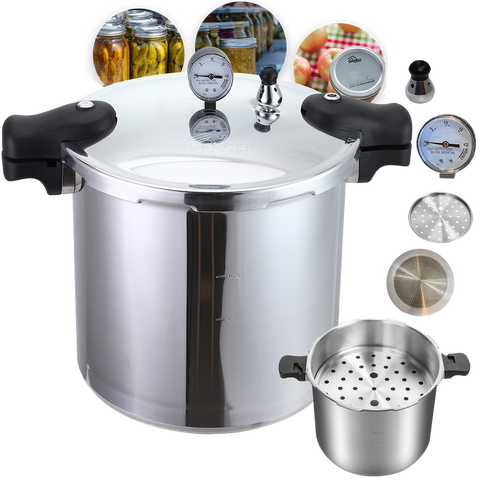
Pressure canning is required for all low-acid foods, including vegetables, beans, meats, poultry, soups, and stocks. These foods cannot be safely processed in a water bath because boiling water does not reach temperatures high enough to eliminate botulism spores in low-acid environments. A pressure canner reaches higher temperatures under sealed pressure, which makes it a non-negotiable piece of canning equipment for anyone preserving anything beyond high-acid products.
Core Canning Equipment Every Home Kitchen Needs
Once the method is established, the core equipment list becomes more defined. These are the items that belong in any serious home canning setup.
A canning pot or pressure canner is the foundational purchase. For water bath processing, a pot that holds at least seven to eight quarts of water with a rack that keeps jars elevated off the bottom is the starting point. For pressure canning, an eight-quart or larger pressure canner with a reliable gauge is essential. A standard pressure cooker is not a substitute for a dedicated pressure canner. The two serve different functions and are not interchangeable for safe food preservation.
A jar lifter is one of those canning items that seems optional until someone attempts a session without one. Lifting hot, filled jars out of boiling water without a proper lifter is both impractical and genuinely dangerous. Quality jar lifters have wide, rubberized grips that hold jars firmly even when hands are wet or the workspace is crowded.
Choosing Canning Jars and Lids That Perform Under Pressure
Canning jars are the vessel everything else in the process serves. Choosing the right type for the task matters for both safety and practicality.
Mason-style canning jars come in two mouth sizes: regular and wide. Regular mouth jars work well for liquids, jams, and thinner preserves. Wide mouth jars are easier to fill with whole or chunked produce and simpler to clean after use. Both are compatible with standard canning supplies including funnels and jar lifters.
Jar capacity should match the recipes being preserved. Half-pint, pint, and quart jars each serve different household needs and different recipe yields. Stocking a practical range of sizes gives home canners flexibility across smaller specialty batches and larger staple runs.
Lids are a single-use canning item. The flat lid with its rubber sealing compound should only be used once to ensure a reliable vacuum seal. The screw band is reusable as long as it shows no rust, bending, or warping. Using quality lids from a reliable source is not the place to cut costs. A failed lid seal means wasted product, wasted processing time, and a potential food safety concern.
Supporting Canning Supplies That Make Every Session Better
Beyond the core equipment, a set of well-chosen supporting canning supplies brings consistency and efficiency to every session.
A magnetic lid wand retrieves hot lids from simmering water cleanly and without contact, keeping lids sanitary and eliminating the risk of burns from reaching into the pot. A dedicated kitchen timer keeps processing times accurate when multiple tasks are running at once, which is almost always the case during an active canning session.
A kitchen scale is useful for canners working from tested recipes that measure ingredients by weight, which is increasingly standard in contemporary canning practice. A food mill or strainer attachment is particularly helpful for anyone making tomato sauce, apple butter, or any preserve where skin and seed removal is part of the preparation process.
Waterproof labels designed for canning jars keep the pantry organized and ensure that jars cycle properly by date. Clear labeling prevents the common problem of unidentified jars accumulating at the back of shelves, forgotten until their quality has declined.
A tested, up-to-date canning reference book completes the supply list. Following approved recipes with verified processing times is the non-negotiable foundation of safe home canning, and no equipment purchase replaces that.
What Separates the Best Canning Supplies From the Rest
With a clear picture of what is needed, evaluating specific products comes down to a few practical criteria that separate reliable canning supplies from items that will cause problems within a season.
Material construction is the most important factor for anything that contacts heat directly. Stainless steel jar lifters, tongs, and funnels outlast plastic alternatives, especially under the sustained heat of long canning sessions. Enameled steel canning pots offer consistent heat distribution and solid durability, though they require care to avoid surface damage. Aluminum pressure canners are lighter but may require different maintenance depending on local water chemistry.
Complete starter kits versus individual items is a genuine decision point. All-in-one canning supply kits offer a convenient entry point for new canners who want to cover the basics in a single purchase without researching each item separately. Canners with experience often prefer selecting individual items for their specific performance qualities. Both approaches are valid, and the right choice depends on where a person is in their canning practice.
Denali Canning offers canning equipment and supplies chosen for home canners who value dependability and practical design. Whether building a setup from scratch or replacing tools that have reached the end of their life, the selection available is worth browsing before committing to a purchase elsewhere.
Conclusion
Home canning does not require a complicated purchasing decision. It requires the right framework: understanding the method, knowing the core items, evaluating quality honestly, and buying from a source that understands what home canners actually need. Canners who invest in the right canning equipment and supplies from the start spend far less time troubleshooting and far more time preserving. Denali Canning is built to support exactly that kind of practical, well-equipped home kitchen.




Comments (0)
There are no comments for this article. Be the first one to leave a message!