Every canner with a big harvest on their hands eventually asks the same question: can more jars go in the pot at once by stacking them? It sounds like a simple efficiency trick, but pressure canning has stricter rules than a stovetop pot of soup, and stacking jars touches directly on food safety, not just convenience. Denali Canning gets this question often enough that testing it directly, inside the roomier Tanker, seemed like the only honest way to answer it. What follows covers what "double stacking" actually means, what USDA and NCHFP guidance says, which jars are safe to stack, and what actually happened during testing.
What Does 'Double Stacking' Mean in Pressure Canning?
Double stacking simply means loading two layers of jars into the canner at once instead of one, usually with a canning rack separating the top layer from the bottom layer. The goal is to get more jars through a single processing cycle rather than running the canner twice. For anyone working through a big tomato harvest, a batch of stock, or a weekend of pantry-stocking, cutting the number of canner loads in half sounds appealing. The catch is that pressure canning depends on steam reaching every jar evenly, and adding a second layer changes how heat and pressure move through the pot.
What the USDA and NCHFP Say About Stacking Jars
The National Center for Home Food Preservation and the USDA are the reference points most canners lean on, and both address stacking directly rather than leaving it to guesswork. Their guidance permits stacking jars in two layers, but only for pint size or smaller jars, and only with a rack placed between the layers so steam can circulate around each one. Quart jars are not part of that approval; tested processing times for quarts assume a single layer. This distinction matters because processing times published by USDA and NCHFP are based on specific jar sizes and loading configurations, and departing from that setup means the tested times no longer apply with confidence.
Which Jar Sizes and Shapes Are Safe to Stack
Pint and half-pint jars are the sizes generally approved for stacking, since their shorter height and lighter weight let a rack sit securely on top of the first layer without crushing jars below. Straight-sided jars also tend to stack more evenly than jars with pronounced shoulders, since flat surfaces distribute weight and heat more predictably. Quart jars are typically kept to a single layer, and mixing jar sizes within a stacked load isn't something Denali Canning or USDA guidance recommends, since uneven heights make it harder to keep a rack level and jars steady.
Results: What We Found When We Double Stacked Jars in the Denali Tanker
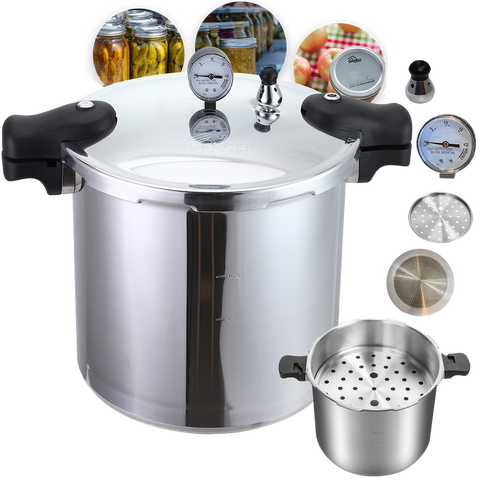
Testing pint jars in two layers inside the Tanker, separated by a canning rack, showed jars in both layers reaching a solid, consistent seal when loaded correctly. The extra headroom the Tanker's larger capacity provides made it easier to fit a full rack without jars pressing against the lid or crowding the vent.
The biggest practical takeaway was how much loading care mattered: jars needed enough space that they weren't touching each other or the canner wall, since jar-to-jar contact during processing is one of the more common causes of cracked glass. Done carefully, stacking pint jars in the Tanker meaningfully increased how many jars came out of one canning session.
Common Mistakes When Stacking Jars in a Pressure Canner
The mistakes that come up most often start with skipping the rack between layers, which lets top jars rest directly on the ones below and blocks the steam flow those bottom jars need. Stacking quart jars is another common overreach, since that configuration falls outside tested USDA and NCHFP guidance. Letting jars touch one another, overcrowding the canner to the point where steam can't move freely, and ignoring a specific canner's stacking instructions round out the list.
Denali Canning's own guide to stacking jars in the Tanker walks through proper spacing in more detail for anyone loading a stacked batch for the first time.
How Double Stacking Affects Processing Time and Pressure
Processing time itself is tied to jar size and the food being canned, not the number of layers in the canner, as long as stacking is done within tested guidelines and a rack is used correctly. What changes isn't the clock, but how carefully the load needs to be arranged so pressure and steam can reach every jar the same way they would in a single layer. That's exactly why the rack between layers isn't optional. It's the piece of equipment doing the real work of keeping heat distribution even across both layers, which is what keeps the tested processing times valid.
When Double Stacking Makes Sense (and When It Doesn't)
Stacking earns its place during high-volume seasons, like a tomato or pepper harvest that needs to get processed before it turns, or any pantry-stocking weekend where fewer canner loads means real time saved. It makes the most sense with pint jars, a properly fitted rack, and a canner with enough vertical room, like the Denali Tanker, to keep both layers clear of the lid. It doesn't make sense with quart jars, with a canner not built for a second layer, or any time there's uncertainty about whether the rack actually fits securely. When in doubt, a single layer is always the safer call.
Conclusion
So, can jars be double stacked in a pressure canner? Yes, with real conditions attached: pint jars only, a rack between layers, careful spacing, and a canner roomy enough to handle it without crowding. Denali Canning's testing in the Tanker backed up what USDA and NCHFP guidance already points to, and it confirmed that stacking done right can meaningfully cut down on canning sessions during a busy harvest. For anyone new to loading a stacked batch, Denali Canning's beginner's guide to pressure canning with the Tanker is a solid starting point, and the FAQ page covers a handful of related loading questions worth a quick read before the next canning session.
Shop the Denali Tanker — Fits More Than You Think →
Frequently Asked Questions
Is it safe to double stack jars in a pressure canner?
Yes, for pint or smaller jars with a rack between layers. USDA and NCHFP guidance supports this configuration specifically; quart jars and unracked stacking fall outside tested, safe recommendations.
Do you need a rack between layers when double stacking?
Yes. A canning rack is required between stacked layers to keep steam circulating around every jar; skipping it blocks heat flow to the jars underneath the top layer.
Does double stacking change the processing time?
No. Processing time depends on jar size and the food being canned, not the number of layers, as long as a rack keeps steam moving evenly through both layers.
Can you stack pint jars on top of quart jars?
Not recommended. Mixing jar sizes in a stacked load makes it hard to keep a rack level and jars stable, and quart jars aren't approved for stacking anyway.
How many jars can you fit in the Denali Tanker when double stacking?
The Tanker's larger capacity allows a full rack of pint jars on top of a bottom layer, fitting noticeably more jars per batch than canners with less vertical clearance.



Comments (0)
There are no comments for this article. Be the first one to leave a message!