Buying your first pressure canner is one of those purchases that feels bigger than it is. You're standing there comparing quart sizes and gauge types, and half the advice online seems to contradict the other half.
Most of that confusion disappears once you know which details actually matter.
This checklist covers capacity, gauge type, build materials, stovetop compatibility, safety features, replacement parts, and the smaller details that tend to matter after a few seasons of use.
1. Whether It's a Canner or Just a Pressure Cooker
A pressure cooker and a pressure canner can look similar, but they are designed for different purposes.
Before using any unit for canning, confirm that the manufacturer specifically identifies it as appropriate for pressure canning.
Why the Distinction Matters
Pressure canning depends on maintaining the correct conditions for the food, jar size, altitude, and tested recipe being used.
Beginners can also review Denali's guide to pressure canning materials before choosing equipment.
Learn What You Need Before Your First Batch
Start with the equipment basics so you know what belongs in a complete pressure canning setup.
Read the Pressure Canning Guide →2. Capacity and Jar Count
Capacity is usually listed in quarts, but the practical question is how many jars you can process during one batch.
Matching Size to Your Harvest
Larger units reduce the number of separate batches needed when processing a garden harvest, meat, broth, beans, or other foods.
Smaller units save storage space but may require more batches.
Quick Gut Check
Think about how many jars you realistically want to process during one session and choose around that routine.
3. Weighted Gauge, Dial Gauge, or Both
Pressure regulation can use weighted systems, dial gauges, or a combination, depending on the canner.
Which One Suits a Beginner?
Weighted regulators provide an audible or visible indication, while dial gauges provide a numerical reading.
Follow the instructions provided for the specific model and gauge system.
4. Altitude Adjustability
Processing requirements change with elevation, making altitude compatibility an important part of choosing a pressure canner.
Check the Available Pressure Settings
Make sure the pressure-control system supports the settings required for your elevation and the tested recipes you plan to use.
5. Build Material and Base Thickness
Construction affects weight, heat distribution, durability, and how the equipment behaves on the stove.
Look Beyond the Outside Finish
Heavy aluminum is commonly used because it transfers heat efficiently, while stainless components can add durability in specific areas.
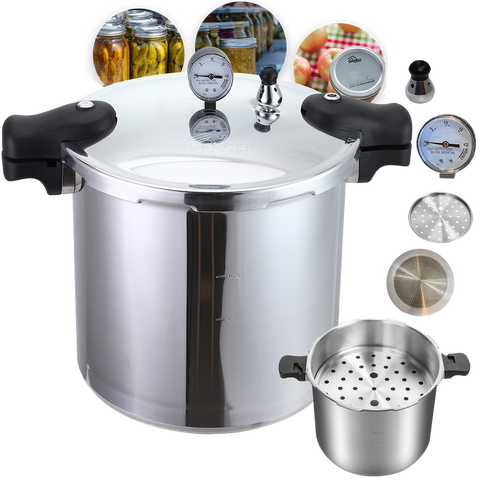
One larger-capacity option is the 23-quart TANKER pressure canner .
Explore Denali Canning Bundles
Bundles can help simplify shopping when you want several compatible canning essentials together.
Browse Canning Bundles →6. Stovetop Compatibility
Not every canner is compatible with every cooking surface.
Glass-Top and Induction Users, Check First
Induction requires compatible cookware, while glass-top ranges may have restrictions involving weight, diameter, or cookware contact.
Check both the canner manual and your range manufacturer's guidance.
Before You Buy, Confirm These 5 Things
7. Safety Features You Can Actually Point To
A good pressure canner should have clearly documented safety mechanisms.
Know What the Safety System Does
Look for pressure-release protection, lid-safety features, venting components, and instructions explaining how to inspect those parts.
Safety Note: Always follow the manufacturer's manual and a current tested canning recipe. Pressure, time, food preparation, jar size, and altitude adjustments are safety-critical.
8. Gasket Design and Replacement Availability
If the canner uses a removable gasket, that component will eventually need inspection or replacement.
Ask Whether Replacement Parts Are Available
Check whether gaskets, racks, regulators, and other wear items are available separately before buying the canner.
9. What Comes in the Box
Two pressure canners at a similar price can include very different accessories.
Check the Accessory List
Racks, weights, and other included pieces can change the real value of the package.
Useful Additions for Your Setup
These accessories complement a pressure canning setup without repeating the main CTA destinations.
Keep an extra rack available for backup use or additional jar support.
View Canning Racks →Browse lids, rings, and supporting equipment for regular canning sessions.
Browse Supplies →Explore Complete Canning Kits
Compare packaged setups designed to bring several canning essentials together in one purchase.
Explore Canning Kits →10. Warranty and Support
A pressure canner is equipment you may expect to keep for many seasons, so replacement parts and support matter.
What Good Backing Looks Like
Look for a real manual, maintenance guidance, responsive customer support, and individual replacement components.
Denali Canning offers canning equipment, accessories, and supporting supplies for home preservation.
Putting the Checklist Together
Capacity and stovetop compatibility eliminate many options immediately. Pressure-control style and altitude support narrow the list further.
After that, focus on construction quality, documented safety systems, accessories, parts availability, and long-term support.
The equipment decision feels complicated until you work through it one requirement at a time.
Explore Denali's Canning Resources
Read more about lids, equipment, storage, pressure canning, and practical home-preservation techniques.
Read Canning Resources →




Comments (0)
There are no comments for this article. Be the first one to leave a message!