
There is a point every home canner reaches when a basic water bath setup no longer suffices. The harvest is bigger, the goals are growing, and low-acid foods are now part of the plan.
That is when the search for a good pressure canner for sale starts. And if you have looked around, you already know how fast it gets confusing. Different sizes, different gauge systems, different price points. This guide is here to make the decision straightforward so you buy right the first time.
Start with what you actually canning
High-acid foods like jams, pickles, and fruit preserves process perfectly fine in a water bath canner. That setup does its job for those foods.
The moment you move into green beans, corn, meats, soups, or any mixed meal, you need a pressure canner. Those are low-acid foods, and they require a level of sustained heat that a water bath simply cannot reach. Pressure canning is the only method that gets there.
Knowing your goals before you shop means you buy once and buy the right thing.
Dial gauge or weighted gauge
Every pressure canner uses one of two systems to regulate pressure, and understanding the difference saves you from buying something that does not suit how you work.
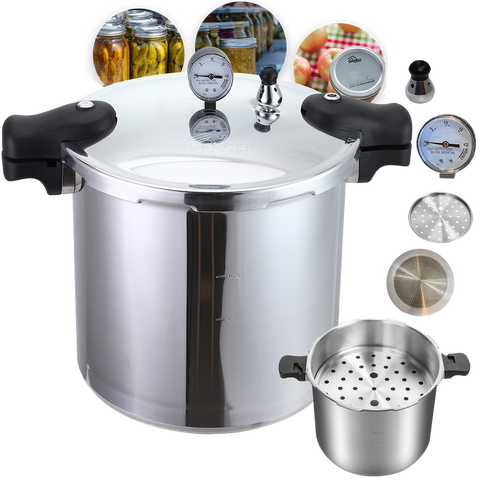
A dial gauge shows a live pressure reading on a numbered face. You watch the needle, adjust the heat, and hold the level your recipe calls for. It is a more involved process, which some canners prefer because it puts them in control of every batch.
A weighted gauge uses a small metal weight that sits on the vent. When pressure is right, the weight rocks or jiggles. Nothing to read, nothing to calibrate. For canners who want a simple, low-maintenance process, weighted gauge models are an easy favorite.
Neither option is better than the other. It comes down to how hands-on you want to be.
Getting the size right
Canners are sized in quarts, but what that means practically is the number of jars you process per batch. Most canners hold a single layer of jars. Some larger models support a second rack for pint jars, which doubles your output per round.
For a household canning through a full garden season, a 16 to 23-quart model is the comfortable range. Smaller 10 to 12-quart canners suit occasional use or limited stovetop space.
If you are putting up serious volume, whether for a large family or a small food business, sizing up from the start saves hours across a season. More batches mean more time standing at the stove, and during harvest, that adds up fast.
Aluminum vs. stainless steel
Aluminum canners heat quickly and distribute that heat evenly, which keeps processing consistent. They are also lighter, which matters when you are moving a full canner on and off a burner. The limitation is compatibility. Aluminum does not work on induction cooktops.
Stainless steel is the longer-lasting option. It handles all cooktop types, resists corrosion, and holds up well through years of regular use. The upfront cost is higher, but the durability makes it a smarter buy for anyone canning seriously over the long term.
The parts that need attention over time on any canner are the lid gasket, safety valves, and overpressure plug. These are easy to replace when you buy from a supplier that stocks accessories. Read our guide to pressure canning worth.
What to check before buying a pressure canner sale
A discounted canner can be a smart buy or a frustrating one, depending on what is behind the price. When you see a pressure canner sale, three things are worth checking right away.
First, are replacement parts available? A canner you cannot service will eventually stop working, no matter how good the original price was. Second, does the capacity match your actual needs? An undersized canner at a low price still slows you down every time you use it. Third, who are you buying from? A dedicated canning supplier will know the equipment and be there when you need support or parts down the road.
Wholesale is an option more home canners should know about
Wholesale purchasing is not reserved for commercial operations. If you are building a serious home setup, stocking a community kitchen, or outfitting a small food business, buying at wholesale pricing makes a real difference in what you can put together from the start.
It also gives you the chance to stock accessories at the same time, so everything is in place before the season begins.
Conclusion
A pressure canner is a long-term investment in your kitchen and your pantry. Buying the right one from a supplier who stands behind it means it will serve you reliably for years. At Denali Canning, we carry pressure canners built for real home use, from first-time setups to high-volume preservation projects. Our collection covers every size and style, and we stock the accessories and replacement parts to keep your equipment running season after season. Start here.
Frequently Asked Questions
What is the difference between a pressure canner and a pressure cooker?
A pressure cooker is built for fast cooking and is not designed for home food preservation. A pressure canner is built to hold a consistent temperature and pressure through the full processing time required for safe long-term storage.
Can I use a pressure canner on an induction or glass cooktop?
Stainless steel canners work on induction cooktops, while aluminum models do not. Always confirm compatibility before purchasing if you have an induction or glass range.
How long does a quality pressure canner last?
A well-built canner lasts well over a decade with proper care and routine part replacement. Buying from a supplier that stocks replacement gaskets and valves is what makes that possible.
Do I need to adjust pressure for altitude?
Yes. At higher elevations, water boils at a lower temperature, so processing pressure needs to increase. Dial gauge canners allow precise adjustments, while weighted gauge models use different weight settings to cover altitude ranges.
Is a larger canner worth it if I only can occasionally?
A 16 quart model handles most occasional jobs comfortably. Most canners who start small find themselves wanting more capacity once they get into a rhythm, so a little extra room upfront rarely goes to waste.




Comments (0)
There are no comments for this article. Be the first one to leave a message!