
If you've ever finished a long canning day staring at a trash can full of used lids, you've probably wondered if there's a better way. Reusable options promise to cut that waste and save money season after season. But the question most home canners really care about is simple: will they actually hold a seal? The short answer is yes, they can. The longer answer is that they work differently from standard canning lids, and those differences are exactly where most failures happen. Here's what's going on under the band, what the research says, and how to decide which lid belongs to your next batch.
How Reusable Lids Differ From Standard Canning Lids
Most jars on pantry shelves are sealed with a two-piece system: a flat metal lid with a ring of sealing compound around the edge, held down by a screw band during processing. Reusable canning lids swap that metal disc for a few separate parts.
The Parts of a Reusable Lid System
A typical reusable setup has three pieces:
- A rigid plastic lid, usually BPA-free
- A separate rubber gasket that sits between the lid and the jar rim
- A standard metal screw band, the same kind you already use
Tattler and Harvest Guard are the best-known names. The lid and gasket can be washed and used again for years, while the band holds everything in place during processing.
Why Single-Use Lids Can't Go Around Twice
The sealing compound on a standard metal lid softens under heat and molds itself to the rim of the jar. Once the jar cools and the vacuum pulls the lid down, that compound keeps the impression of the rim. Pry the lid off and the indentation stays, so it can't form a reliable airtight seal a second time. That's why fresh canning lids for regular mouth jars go on every new batch, even when last year's looks perfectly fine. Bands are a different story. As long as they're free of rust and dents, they can last for many seasons.
Do Reusable Canning Lids Actually Seal?
They can, and plenty of homesteaders have used them successfully for years. But "can" is carrying a lot of weight in that sentence.
What the Research and Extension Services Say
The National Center for Home Food Preservation still recommends the standard two-piece metal lid system for home canning. Some university extension services, including North Dakota State University and the University of New Hampshire, note that more recent research suggests reusable plastic lids will seal jars safely, as long as you follow the manufacturer's instructions exactly. That last part isn't a throwaway line. It's the whole game.
Comparisons between lid types have generally found that reusable lids produce acceptable results, while traditional metal lids seal more consistently, both during processing and in storage. Online, you'll find canners who report near-perfect results and others who gave up after losing half a batch. Usually, the difference comes down to technique, not luck.
The Seal Forms Differently
With a metal lid, the vacuum does the work. As the jar cools, it pulls the center of the lid down and you hear that satisfying ping. A reusable lid has no flexible center to pop, so there's no sound and no dip to press. The seal depends on the rubber gasket pressing firmly against a clean rim, and on how you handle the band before and after processing.
Why Reusable Lids Fail and How to Prevent It
Most failed seals with reusable canning lids trace back to a handful of avoidable mistakes.
Treating Them Like Metal Lids
This is the big one. Reusable lids need room to vent while they process. Crank the band down too hard going in and air can't escape, which can trap pressure, make the lid bulge, or keep a seal from forming at all.
Band Tension Before and After Processing
Manufacturer instructions typically tell you to screw the band on only until the jar starts to spin on the counter. After processing, you lift the jars out and tighten the bands right away while they're still hot, using a towel to protect your hands. That post-processing step is the opposite of what you'd do with metal lids, where you leave the band alone once jars leave the canner. Directions have changed over the years as the lids were redesigned, so always follow the instructions printed on the box you actually bought.
Worn or Damaged Gaskets
Rubber gaskets don't last forever. Look for nicks, cracks, stretching, or a gasket that no longer lies flat. Any of those can leave a tiny gap the seal can't close. Replace them as soon as they look tired. The same habit pays off with metal lids and bands, and a quick routine to inspect lids and rings before canning catches most problems before they cost you a batch.
Dirty Rims and the Wrong Headspace
This applies to every lid type, but reusable lids seem less forgiving. Wipe each rim with a clean, damp cloth right before the gasket goes on, and measure headspace with a ruler instead of eyeballing it. A drip of brine or a sliver of fruit pulp on the rim is enough to ruin the seal.
How to Check the Seal on Reusable Lids
Since there's no ping, you need a different test. Let the jars cool undisturbed for 12 to 24 hours. Then remove the band and gently lift the jar by the edge of the lid. If the lid holds firm, the jar is sealed. If it lifts off or shifts, the seal didn't take.
What to Do With Unsealed Jars
Handle an unsealed jar the same way you would with any lid. Put it in the refrigerator and use it within a few days, or reprocess it within 24 hours with a fresh gasket or a new metal lid.
Reusable vs Single-Use: Which Should You Choose?
When Reusable Lids Make Sense
If you can large batches of high-acid foods like jams, pickles, or tomatoes in a water bath, and you're comfortable with a learning curve, reusable lids can pay for themselves over time. They also work well for dry goods storage and for canners who want to cut down on waste. Many experienced users suggest practicing with a few jars of plain water first, so the only thing at stake is time.
When Single-Use Lids Are the Better Bet
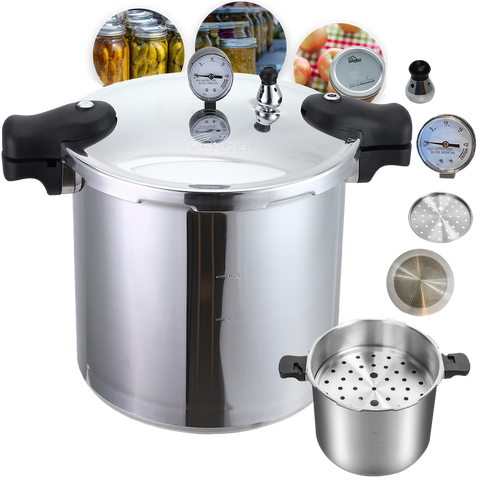
For low-acid foods like green beans, meat, or broth that go through a pressure canner, many canners prefer to stick with what's been tested most. When you're running a full load in a large canner like the TANKER 23-quart pressure canner, a few failed seals mean a lot of wasted food and hours of work. The same goes for beginners. Learning to can is easier when the lid gives you clear signals, like that ping and a firm, concave center. Keep a set of sturdy canning rings on hand, put fresh flat lids on each batch, and you'll rarely be guessing.
Storing Lids Between Seasons
If you buy single-use canning lids in bulk, keep them somewhere cool and dry. According to the National Center for Home Food Preservation, the sealing compound in unused lids works best within about five years of manufacture. Reusable lids store indefinitely, but check the gaskets each season, since rubber can dry out and lose its flexibility.
Pick the Lid That Fits the Way You Can
Reusable lids really can seal, but they reward patience and careful technique. If you're willing to learn their quirks, they're a solid option for certain batches. If you want consistency every time, especially under pressure, traditional lids remain the dependable choice. Denali Canning makes buckle-resistant canning lids and steel bands built for exactly that kind of reliability. Whatever you choose, read the instructions, wipe those rims, and check every seal.
FAQs
1. Can you use reusable canning lids for pressure canning?
Most reusable lid manufacturers say their lids work for both water bath and pressure canning. The National Center for Home Food Preservation still recommends two-piece metal lids, so if you go reusable, follow the brand's instructions exactly. Many canners keep metal lids for low-acid foods.
2. How many times can you reuse a reusable lid?
The plastic lids can last for years as long as they aren't cracked, warped, or chipped. The rubber gaskets wear out faster. Replace any gasket that's nicked, stretched, or no longer lies flat against the rim.
3. Why didn't my reusable lid make a popping sound?
Reusable lids have no flexible center, so they won't ping the way metal lids do. To check the seal, remove the band after the jar cools and lift it gently by the edge of the lid.
4. Can I reuse regular metal canning lids?
Not for canning. The sealing compound keeps the impression of the first jar rim and won't reliably seal again. Used metal lids are still handy for dry goods or jars stored in the fridge.
5. Should I tighten the bands after canning?
It depends on the lid. Reusable lids usually need the band tightened right after the jars leave the canner. With standard metal lids, leave the bands alone so you don't disturb the seal while it forms.
6. Do reusable lids fit both regular and wide mouth jars?
Yes. Reusable lids and gaskets come in regular and wide mouth sizes, just like metal lids. Match the lid, gasket, and band to the jar opening, since mixing sizes is a guaranteed failed seal.




Comments (0)
There are no comments for this article. Be the first one to leave a message!